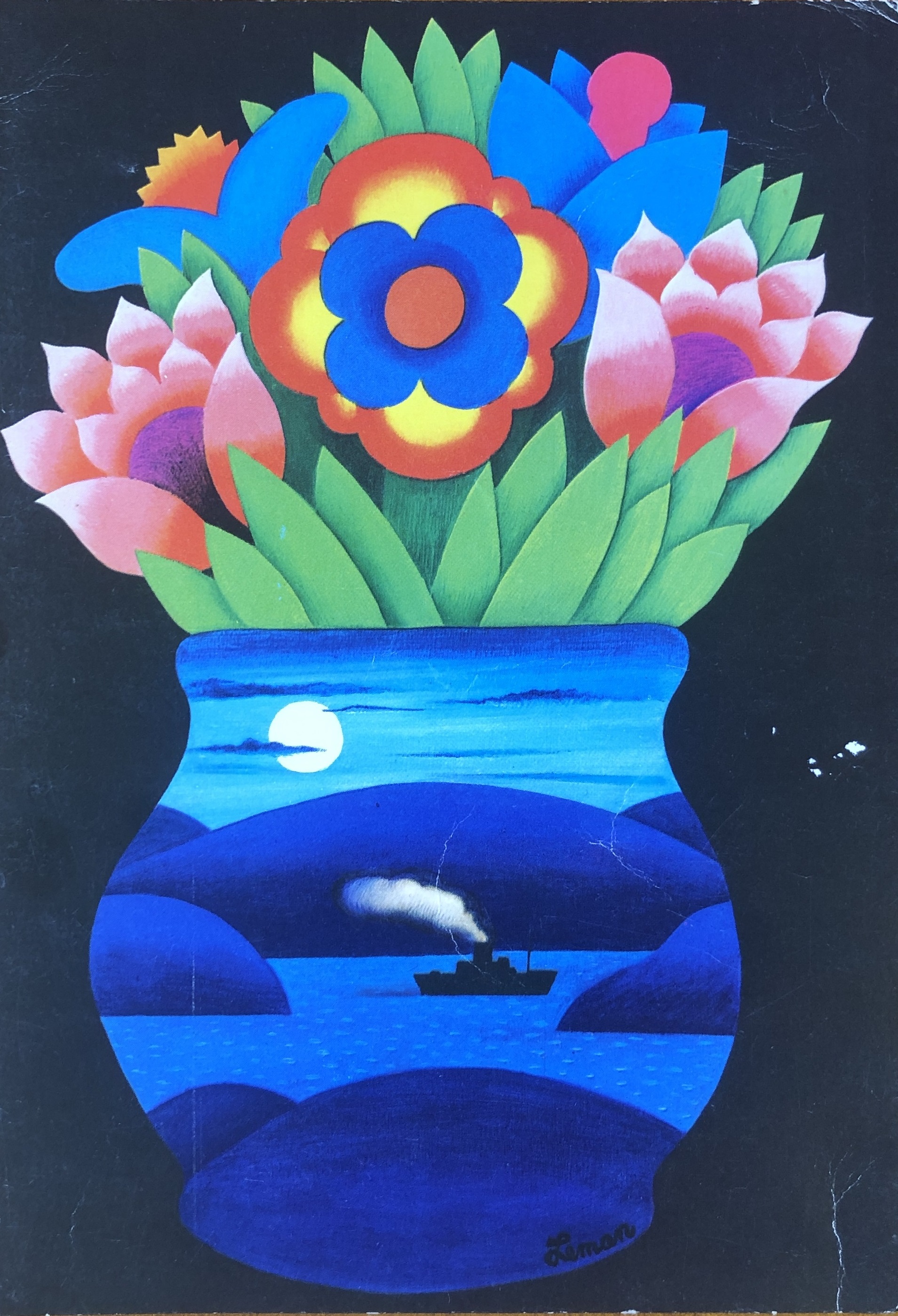
It’s Schizophrenia Awareness Week – again! I know, right. Where does a year go? May 18 – 24. The theme is “Rethink the Label: Reclaim the Story.” I’ve updated this post to create a fairly decent resource for those curious to know more about the galaxy’s most misunderstood everyday condition.
There’s just so much stigma around schizophrenia. It’s a life’s work humanising the 30, 000 adults in Australia with the condition. It feels sub-impossible, but utterly worthwhile.
It’s seven years since my book Get Up Mum was released. Today Mum is experiencing the best mental health of her life. Schizophrenia doesn’t have to be a life sentence, but it is hard to spell.
I recently gave an interview for ABC’s Conversations. The producer sent me a link to a previous story concerning Glenn Jarvis who worked for Enron and developed schizophrenia. There are some very insightful links at the bottom of the story. (One of the articles is behind a paywall, so I’ve placed it at the bottom of this post.)
May 24 is WORLD S A D (as it happens.)
(Schizophrenia Awareness Day)
Last year I wrote a piece for Satellite Foundation (of which I am an ambassador). So feel free to have a look at that!
🧠 Schizophrenia: A shadow with a face

Meanwhile, check out this zine vending machine!
Such convenience. 📚
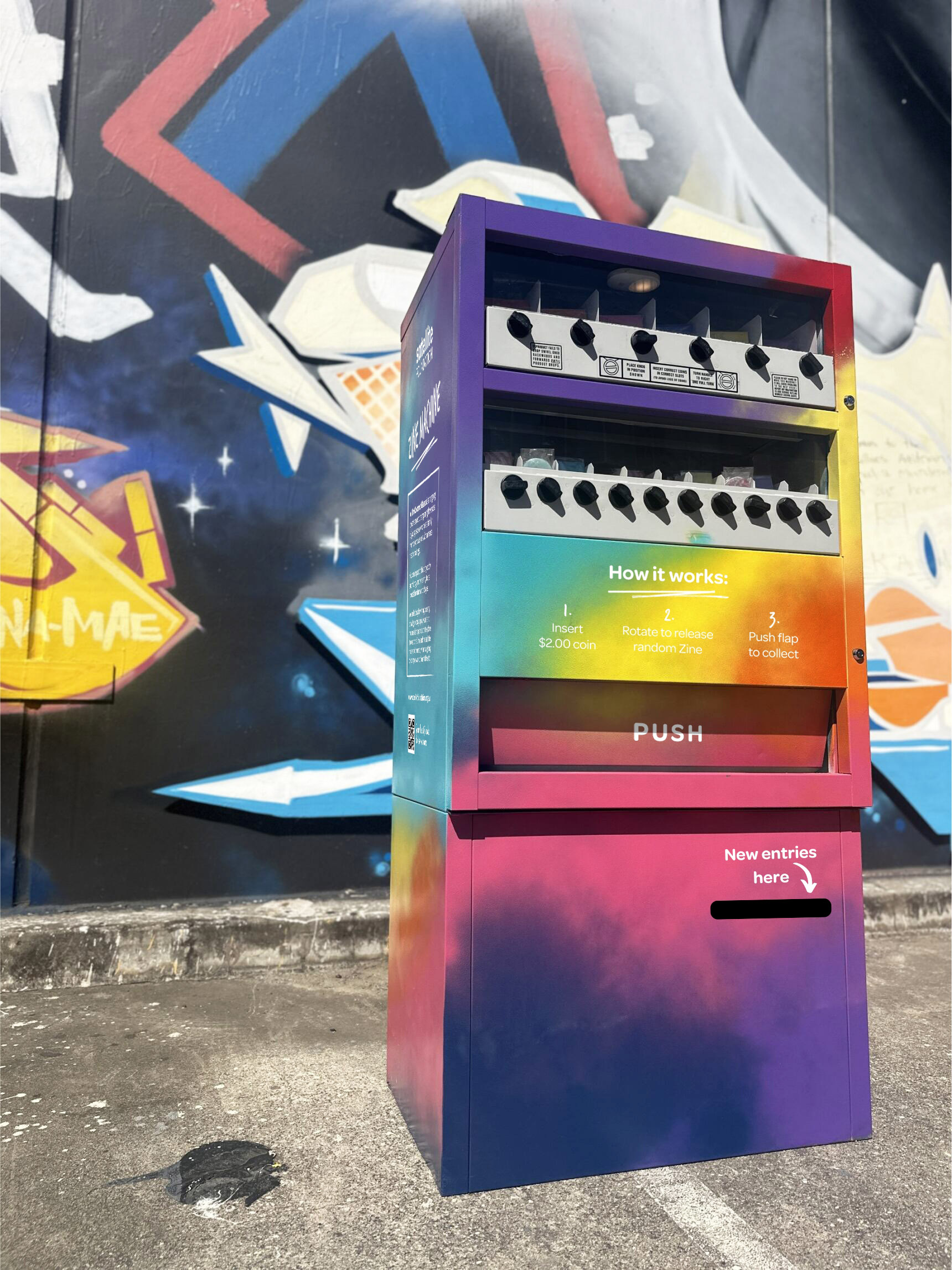
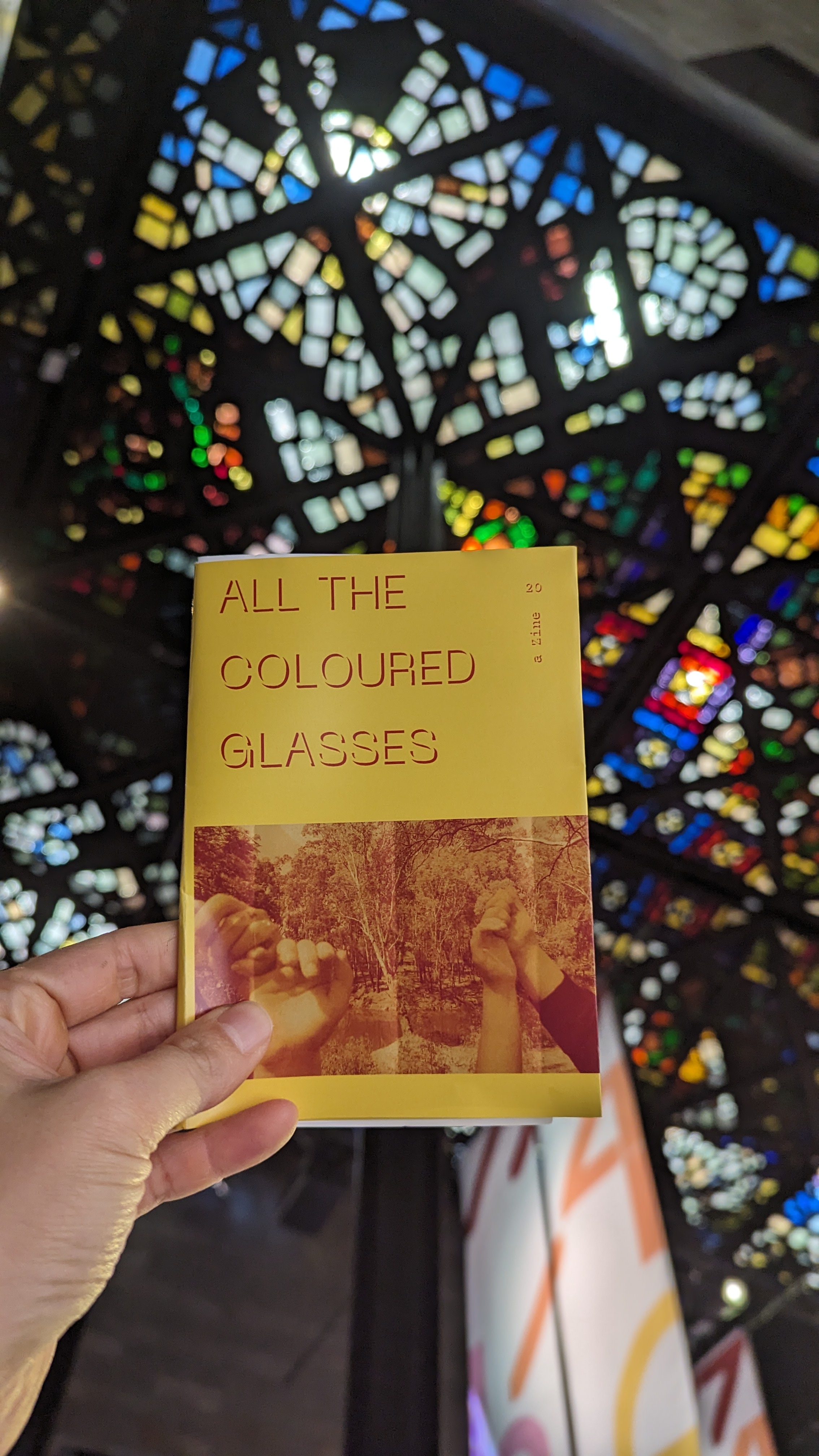
It premiered at Melbourne Art Book Fair / Melbourne Design Week dispensing Satellite Foundation’s zine All the Coloured Glasses – filled with writing and art from young people sharing their experiences of mental health and things.
You can contribute to the zine! Y’know, if you’re a… what are they called – young person.
More info at Satellite Foundation.
And now … a megamix of previous Awareness Week thoughts on the thirteen letter word…

Sometimes I wonder if schizophrenia should not abandon its branding and relaunch as Thoughtism.
It’s rather hard to explain schizophrenia without disturbing people too much. We all know what people are like if they are a bit disturbed. They switch off. Unless it’s a true crime podcast – in which case it doesn’t matter how dark the content is – audiences can’t wait to snuggle down before bed.
I don’t know what the difference is.
But anyway – food for thought.
let’s do lunch.

Previously on World Schizophrenia Awareness Day….
It’s the time of year where you deposit some thought to the gentle complexity of one of existences most cryptic yet vulnerable conditions. Why don’t we talk about schizophrenia more? Ever wondered that? I do, quite a bit. It seems to go under the radar quite effectively. There’s a whole stack of destigmatising to be done – or – to conjure a more handsome phrase – rehumanising.
I mean, I’ve been up close to someone with schizophrenia and honestly, my heart still weeps. I reckon my Mum is brave as all fuck for withstanding the atomic martian wildness of her own mind warping itself to fit through the eye of the needle of life.
These are real people. On the ground. Suffering. Trying to be good parents. They are gobsmacked by confusion. Their personality has secret mirrors growing like gills. They are x-men and women, able to see through time. Heaven and hell are storybook wonders compared to the cheek-scolding heartbreak of disappearing in plain sight from the people who love you more than anything.
Anyway, big hugs and NDIS support to anyone who is experiencing hard times.
We can be superheroes, just for one day.
g r o u n d h o g __ d a y ?
AT A GLANCE (STAT!):
- Schizophrenia effects 1 in 100 people. The same ratio as autism.
- It comes from the Greek word meaning ‘split mind.’ It’s not multiple personality disorder, it’s about the schizophrenic person having a fractured perception of reality. There is the real world and then there is their world. This results in them convincing themselves that they are not sick. Therein lies the paradox of trying to care for someone with this condition. You’re yelling via cup and string to a rogue astronaut on opposites day.
“I’ll be alright after a sleep tomorrow, I promise.”
In response to the comments beneath my Sky News soundbite. No, it’s NOTHING like Trump voters thinking their world view is right and everyone else’s is wrong. That is an extreme political ideology. At least Trump exists in our reality (I never thought I’d say that.) People with schizophrenia have psychosis. They experience auditory and visual hallucinations. This is why using ‘schizophrenic’ as an adjective is problematic. Voting for Trump isn’t a medical condition, it’s a personality trait – as much as the ‘hilarious’ jokes to be made would hint at the former. - Statistically they are more likely to be the victims of violence than the perpetrators. The cliché of the unhinged guy on the bus or (you know, recent events in Sydney) – it’s a worst case scenario and statistically rare. Even at her worst, when we went to the bank, Mum would be quite composed. People with a mental illness generally work twice as hard as the rest of the community just to be themselves. Australians love a hard worker, don’t they?
- They are likely to be conduits of bizarre behaviour. According to a SANE spokesperson, symptoms can include “hallucinations, delusions, unusual or disrupted speech, disorganised behaviour, low energy, low motivation, or lack of emotional expression.” One friend said his Mum used to communicate with Jupiter. (Jennifer Jupiter?) Another said his Mum would see a little man and woman walking around her flat, an inch tall, shining lights in her face and shapeshifting into animals. This level of psychosis is creative and makes for a fascinating story if you regard it from a neuro-nonnormative perspective.
Schizophrenia is a lot less threatening when you spend some time up close.
There is love in curiosity.
- Schizophrenia is not full-time. Mum was well half the time and sick the other. She was still a wonderful individual with autonomy, functioning as best she could and getting me breakfast while navigating the extremities of humanity. Mum used to be ‘Mother’s help’ and visit my primary school and help kids in my class type their stories up on the computer. She worked hard, in many ways.
As a listener to the radio version of my memoir Get Up Mum emailed to me: “I remember a Mum who would take me to sporting activities, cook dinner, have afternoon tea ready for me after school, and take us for swimming lessons at the beach. I also remember a Mum who would sleep all day, yell and scream, and a Mum who spent months at a time locked up in a high security psychiatric hospital.”
It’s a split world for everyone.

- Caring is full-time. Two words: hyper-vigilance. Part of Schizophrenia Awareness Day can be devoted to carers who are most likely family members and in the most urgent cases – kids. If someone you know has a mental illness and they also have children – I’m telling you – that child, by default, IS a carer. They are most definitely in need of support. If you are unsure about what to do, Satellite Foundation is a great place to start.
- Hearing voices is more common than you think. Apparently 10-25% of people will hear voices at some point in their lives. Amazingly, it’s not always linked to schizophrenia. This was news to me when I watched the SBS Insight episode. iView currently has the full You Can’t Ask That schizophrenia episode. It’s also a terrific resource.
- Schizophrenia is devastating. Especially when used in Scrabble. You drop that thing on a triple word score and it’s WALK AWAY RENE!

A FEW LINKS TO PAST THINGS I HAVE CONTRIBUTED:
- In 2022 I wrote a letter to schizophrenia. You can find it on the Satellite Foundation website.
- I was interviewed on Sky News during Schizophrenia Awareness Week in 2018, days after releasing Get Up Mum. I don’t get to go on TV much. (Spicks & Specks in 2010 featuring myself and Marcia Hynes together at last and me covering Spiderbait’s ‘Calypso’ on Adam Hills Gordon Street Tonight in 2011).
- An interview (with fellow only child Elizabeth Flux) in the Guardian from 2018 which is all about my book and lived experience.
- I wrote a column about schizophrenia for The Big Issue in 2019.
- There aren’t that many movies about schizophrenia. I didn’t watch The Joker but can only imagine it set the empathy cause back miles. Sally Hawkins did a wonderful job in 2020’s Eternal Beauty where she portrayed a colourful character. (Is it interesting how when Sia cast a non-autistic actor in her movie Music everyone went hyper-nuclear but the fact that an actor without schizophrenia represented this community didn’t ruffle a spacebar. It’s almost as if that particular aspect of the mental health spectrum is i n v i s i b l e .
Do-gooders be like – we’re championing this cause because it’s SO COOL right now, but that one over there is FAAAREAKING US OUT.)
There’s an article about how schizophrenia is represented in cinema here. - Other fine movies about mental illness include Angel Baby (AU 1995), An Angel At My Table (NZ 1990), Sweetie (AU 1989 – probably my favourite Australian movie), Benny & Joon (US 1993), Birdman (US 2014) & Donnie Darko (US 2001). I really enjoyed Girl, Interrupted (US 1999) the other day, even though the reviews are subpar – (who doesn’t love Winona?) I recommend The Sunnyboy (2013 Australian documentary about Jeremy Oxley, lead singer of The Sunnyboys who emerges from a 30 year battle with the illness).
- I’m not sure if I enjoyed The Fischer King but as my psychologist pointed out it does do a good job of visualising the vivid dynamics of the schizophrenic persons worldview. You may be interested in The 5 Most Accurate Depictions of Schizophrenia in Hollywood.

- I Never Promised You a Rose Garden is a way out film from the 1970s. The book was always sitting on the bookshelf at Nan & Pop’s. (The girl on the cover gave me my biggest ethereal crush since The Childlike Empress from Never Ending Story.) Anyway, I read it as an adult and it’s an artistic deep-dive into the psychedelic secret world that I touched on previously. Greenberg writes in the voice of the ‘voices’ which I found thrilling.
I know you’ve got to be in the right headspace for these subjects. Or perhaps you don’t. Maybe there is never a convenient time. Goose step out of your comfort zone, throw some paint around in the studio of understanding and fan your aura to the experimental frequencies of the meek and neurologically diverse.
Schizophrenia is a cause that needs everyone to come together with education, patience and some emotional heavy lifting.
That’s about it. I’ll add links to some of the soft hitting articles I’ve unpacked about my own mental health philosophies. I know you’ve got a toasted sandwich on the go and about six kids and animals to pick up from the mall so I’ll save you time and let you jump straight into:
i Is The Loneliest Letter
Depress Conference
How Do You Talk To A Depressed Person
&
Dream Player
Bonza. Take care. x
ps don’t forget to tag me on linkedin

pps if you are still feeling overwhelmed or frustrated that you simply have no tangible emotional construct of what the heck anyone is talking about when it comes to this specific topic with the word which is even complicated to spell… Well, there happens to be a real easy fix to that one (for a change):
📖 buy my book 📖
( No wait, it’s sold out I think )
carers: empathy through determination
And now the Schizophrenia Awareness Week dancers 💃💃💃👻 … oh no they disappeared.
Encore encore! More More!
Schizophrenia – the lone wolf of mental illnesses
By Gabrielle Carey and Dr Julia Brown
There is someone in Parliament House with schizophrenia.
At least, statistically speaking.
One in every 100 people suffer from schizophrenia. Of the 5000 people working on the hill when parliament sits, it is very likely that at least one has the diagnosis nobody wants to talk about, even in Schizophrenia Awareness Week.
Why has schizophrenia been called the scariest word in the English language? And why – after years of mental health awareness-raising – are we still unable to talk about it? When the word schizophrenia is mentioned the go-to image is usually violence – often first designated as terrorism. In these rare incidents, the focus is seldom on how proper treatment for the illness might have prevented an attack. Instead, it is on how others should have been protected.
Perhaps it’s time to invite schizophrenia in from the cold.
Recovery is possible
What most people don’t know, is anyone diagnosed with schizophrenia, like other mental illnesses, can recover if given the opportunity. Individuals with the diagnosis can be ordinary and high functioning, have families, and go to work every day. We just never get to hear about them. Because while bipolar and autism are household words, schizophrenia is still the disease that dare not speak its name.
Not being able to speak about schizophrenia compounds the condition. Treating people as social lepers makes them sicker. In Australia, up to 70 per cent of people who have a first episode of psychosis will have another episode within two years. More worryingly, the life expectancy of Australians diagnosed with schizophrenia is reduced by 32 years.
The threat to our youth
If any other illness resulted in such a bleak outlook for our young people, there would be a call to arms. That we are letting this continue is the real madness.
Schizophrenia is a young person’s illness: a diagnosis is generally made between the ages of 18 and 30. This is a crucial time in any person’s life – they are just finishing school, just starting university or just going into the workforce. But if you are diagnosed with schizophrenia in this country, within a short time you will not be participating in work or education; you will have a high risk of homelessness; you will be much more likely to end up in jail, and your anti-psychotic drugs will cause physical twitches, weight gain, drooling, loss of libido and loss of memory. As well as that, you will be five times more likely to be the victim of assault.
Headspace can’t help you if you are a young person with schizophrenia because they do not deal with people who are diagnosed with a chronic psychotic illness. The National Disability Insurance Scheme won’t help either. As reported by The Guardian, people with schizophrenia are regularly refused NDIS packages.
One Door Mental Health, formerly the Schizophrenia Fellowship which offers support to sufferers and their families, has had to cut services in some regional locations. Hospital emergency departments are useful if you are mid-psychosis but once stabilised you will be discharged without any after-care or discharge plan. In all, our healthcare system is not designed to instil hope for recovery in people diagnosed with schizophrenia. But neither is our social system.
Social disconnect
The worst loss of all for people diagnosed with schizophrenia is the loss of friends. The fear and avoidance of people with the condition is so damaging that sufferers retreat into what anthropologists call “social defeat”.
People with schizophrenia often appear to isolate themselves from family and friends. This gives the impression that they do not care about others, but their real difficulties began and continue precisely because of their acute sensitivity to judgments and criticisms – because they care too much about what other people think of them. And of course, in almost any situation, what frightens them most is revealing their condition.
A public service
Everyone knows somebody with schizophrenia. If you include the families and friends of those with the illness, there are one million people in Australia affected by the disorder – and almost every one of them is too frightened to say the word. One thing that might help is if high-functioning individuals with the condition were to “come out.”
As Law Professor of the University of Southern California, Elyn Saks, says “we who struggle with these disorders can lead full, happy, productive lives, if we have the right resources.” The first and most important resource might be social acceptance. And social acceptance begins with being seen.
Those like Professor Saks are in recovery because of the social status and purpose they have. Most Australians with schizophrenia, for now, don’t have this. If you are that person in Parliament House hiding your diagnosis, maybe now is the time to offer your greatest gift of public service. Stand up and dare to say the word. Tell us your story. There are a million Australians who could do with hearing it.
This article was originally published in 2019.
Dr. Julia Brown is a Visiting Fellow at the ANU who has conducted ethnographic research on lived experiences of antipsychotic treatment for chronic schizophrenia in the UK and Australia.
Gabrielle Carey was an Australian author who co-wrote the teen novel, Puberty Blues with Kathy Lette. She died in 2023. At the time of writing this article she was the H.C. Coombs Fellow at ANU and working on a book about the family experience of mental illness.
Discover more from f u z z y ⚡ l o g i c
Subscribe to get the latest posts sent to your email.
 f u z z y ⚡ l o g i c